
The Paris Liberation Day Tradition
The Day of the JackalThis flow traces how the memory of liberation shapes the assassin’s timing, the President’s public role, and the city’s ceremony.
increasing Bearing strength in each event
 decreasing
Bearing strength in each eventdecreasingThe Call from Exile

The Call from Exile
A remembered appeal
Charles de Gaulle’s Appeal of 18 June becomes a defining memory of resistance and national continuity. The Jackal later studies the President’s memoirs and searches for dates charged with public meaning.
History as a clue
The date is not merely a calendar entry to the assassin. It reveals how political memory can shape public behavior, giving a careful observer a way to anticipate where a leader may feel compelled to appear.
Liberation in Memory
Liberation in Memory
A city’s defining day
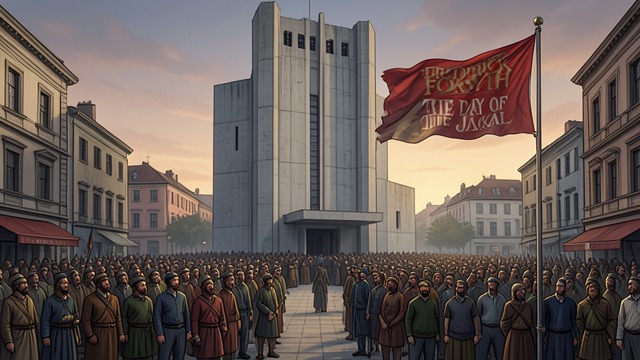
The liberation of Paris becomes a public source of pride and a personal milestone for those who experienced resistance and occupation. The city’s monuments and ceremonies preserve that memory in civic form.
Meaning creates predictability
The Jackal recognizes that Charles de Gaulle is closely bound to the day. The same historical symbolism that sustains national identity also makes the President’s presence more predictable.
A Date Chosen for the President

A Date Chosen for the President
Studying public habits
The Jackal compares reports and past schedules, looking for an occasion that Charles de Gaulle will not casually avoid. His research turns personal pride and public ritual into parts of the operational plan.
The assassin’s inference
He selects Liberation Day because he expects the President to attend regardless of danger. The choice shows how an assassin can weaponize the meaning a leader assigns to his own public role.
The Ritual Proceeds
The Ritual Proceeds
Ceremony under protection
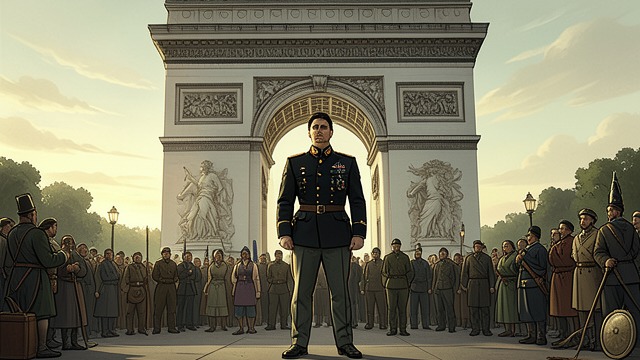
Charles de Gaulle rekindles the flame at the Arc de Triomphe, attends Mass at Notre-Dame de Paris, and visits Mont-Valérien. The events continue despite intensified security and the known threat.
Public composure preserved
The President’s refusal to cancel his engagements allows the state to project continuity. The same decision also forces the security services to defend several open ceremonial settings rather than removing the risk by staying indoors.
The Ceremony’s Unplanned Gesture
The Ceremony’s Unplanned Gesture
A meeting of histories
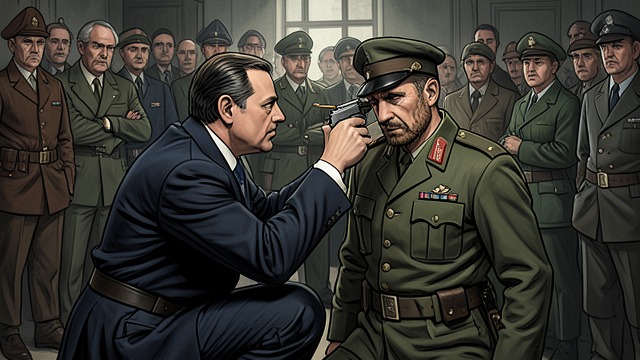
At the medal ceremony, Charles de Gaulle faces a veteran whose experience belongs to the liberation being commemorated. The President bends to kiss him, following a familiar gesture of public congratulations.
Chance defeats design
The movement shifts his head as The Jackal fires, and the bullet misses. The ceremony’s human warmth, rather than a security measure, alters the course of the assassination attempt.
June 18, 1940
August 25, 1944
July 1963
August 25, 1963, morning
August 25, 1963, afternoon
